Piano di Sorrento’s shipbuilding history: where can you find reliable traces?

The Sorrento peninsula’s sea is often presented as a view or a route to an island. Piano di Sorrento offers another way to think about it: as a source of skilled work, education and community life. Shipbuilding history does not always announce itself through a preserved workshop open to visitors. Sometimes its most reliable traces are a civic historical text, a named institution and a harbor whose present use needs to be distinguished from its past.
Begin with a source that tells you its age
The Comune di Piano di Sorrento’s cultural website republishes a June 1979 article from the local periodical Il Carottese about the Nino Bixio nautical institute. The article connects nineteenth-century peninsula shipyards and sailing vessels with the development of nautical education. It also explains that the historic geographical expression Piano encompassed a wider area than today’s municipality. This is valuable historical context, but the article’s present tense belongs to 1979, not to your travel date.
That distinction prevents several easy mistakes. A building mentioned as a school site in an old account is not automatically its current visitor entrance. A training facility described decades ago is not proof of a museum you can enter today. Read the historical source for the questions it raises, then use current official information for practical access. The method is simple, and surprisingly useful far beyond maritime history.
Think about the skills behind a vessel
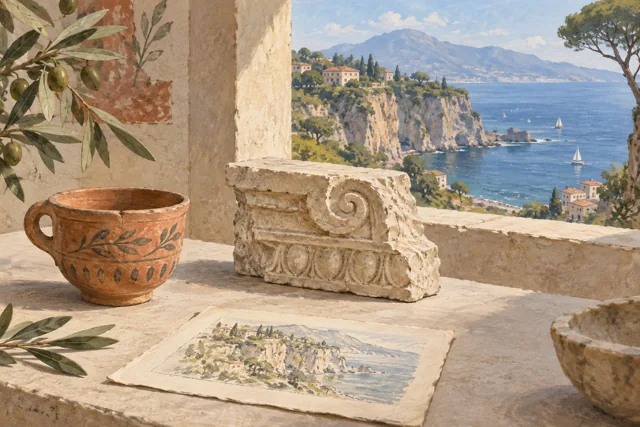
A wooden vessel brings together decisions about shape, strength and use. Rather than imagine that every old boat followed the same recipe, ask which type of vessel a source is discussing and what evidence survives. A model, a photograph, a technical drawing and a written reminiscence reveal different things. A model may clarify structure without proving every material detail; a harbor photograph may show scale while leaving the working process invisible.
The 1979 civic article makes education part of the maritime story, rather than treating shipyards as isolated places of manual labor. It describes the development of nautical schools and later training for different maritime roles. You need not memorize the sequence of institutional names. The useful insight is that the coast’s working life depended on knowledge passed through organized teaching as well as through practical experience.
Read the harbor as a living place
Marina di Cassano is a reasonable place to begin thinking about Piano’s relationship with the water. Visit public areas, respect barriers and do not treat an active work space as a heritage attraction simply because it looks interesting. A person repairing a boat is doing a job, not providing an unannounced demonstration. Ask permission before photographing workers, and never enter a yard or board a vessel without explicit authorization.
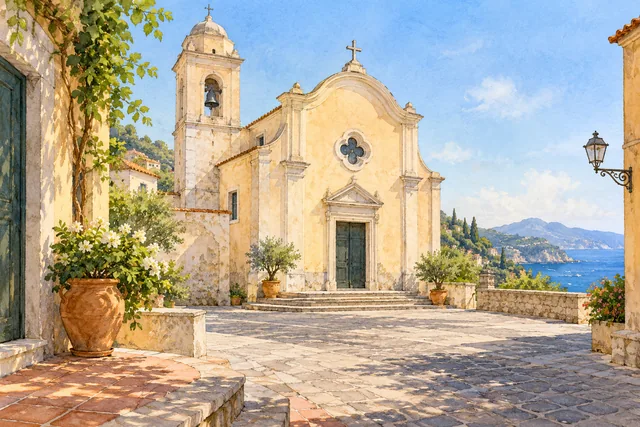
The municipal cultural site describes the church of the Madonna delle Grazie among the marina’s houses, partly set into the tuff cliff. Its account adds a religious and residential layer to the waterfront. That helps resist a narrow picture in which maritime history consists only of ships. Families, devotion, buildings and the physical coast also belong to the community’s story. An exterior observation is worthwhile even when the church is not open.
Keep nearby histories separate
The Georges Vallet Museum, in Piano di Sorrento, explores a much earlier archaeological story. It can provide an interesting contrast if its current opening arrangements suit you, but its location does not turn it into a shipbuilding museum. Likewise, Sorrento’s inlaid wood concerns another craft tradition. A shared material such as timber is a starting point for comparison, not evidence that the crafts used identical techniques or served identical markets.
Our guide to Sorrento’s two different harbors also helps with a frequent practical confusion. Marina di Cassano in Piano is not Marina Grande or Marina Piccola in Sorrento. Save the precise place name when planning a walk, transfer or excursion. A listing that uses Sorrento broadly may still depart from a different town, so the stated meeting point deserves more attention than the headline photograph.
Build a visit around questions you can answer
Before setting out, choose one manageable aim: identify the waterfront setting described by the municipal site, read a historical account thoughtfully, or ask the tourist office whether a current public maritime initiative is available. Do not assume a shipyard tour exists. Check the route down to the marina and the return journey, especially if gradients or steps affect your group. A pleasant descent can be a demanding climb later.
For a separate day, Pietrarsa railway museum offers a different transport history through an established museum. Comparing a documented museum display with a living coastal town can make both more interesting, provided their access arrangements remain distinct. Our Sorrento history experiences are another place to look for guided context, with itinerary and meeting details checked individually.
Leave with one clear distinction between evidence and imagination. A harbor can suggest centuries of work, but a reliable visit does not need to invent what stood on every patch of ground. Recognizing what a source can tell you, and where it stops, makes the maritime past more compelling rather than less vivid.
Sources & further reading
Turn a good read into a great day.
Find a highly rated Sorrentine experience that brings these stories to life.
Explore related experiences →