Sorrento’s inlaid wood: how should you look at a piece of marquetry?
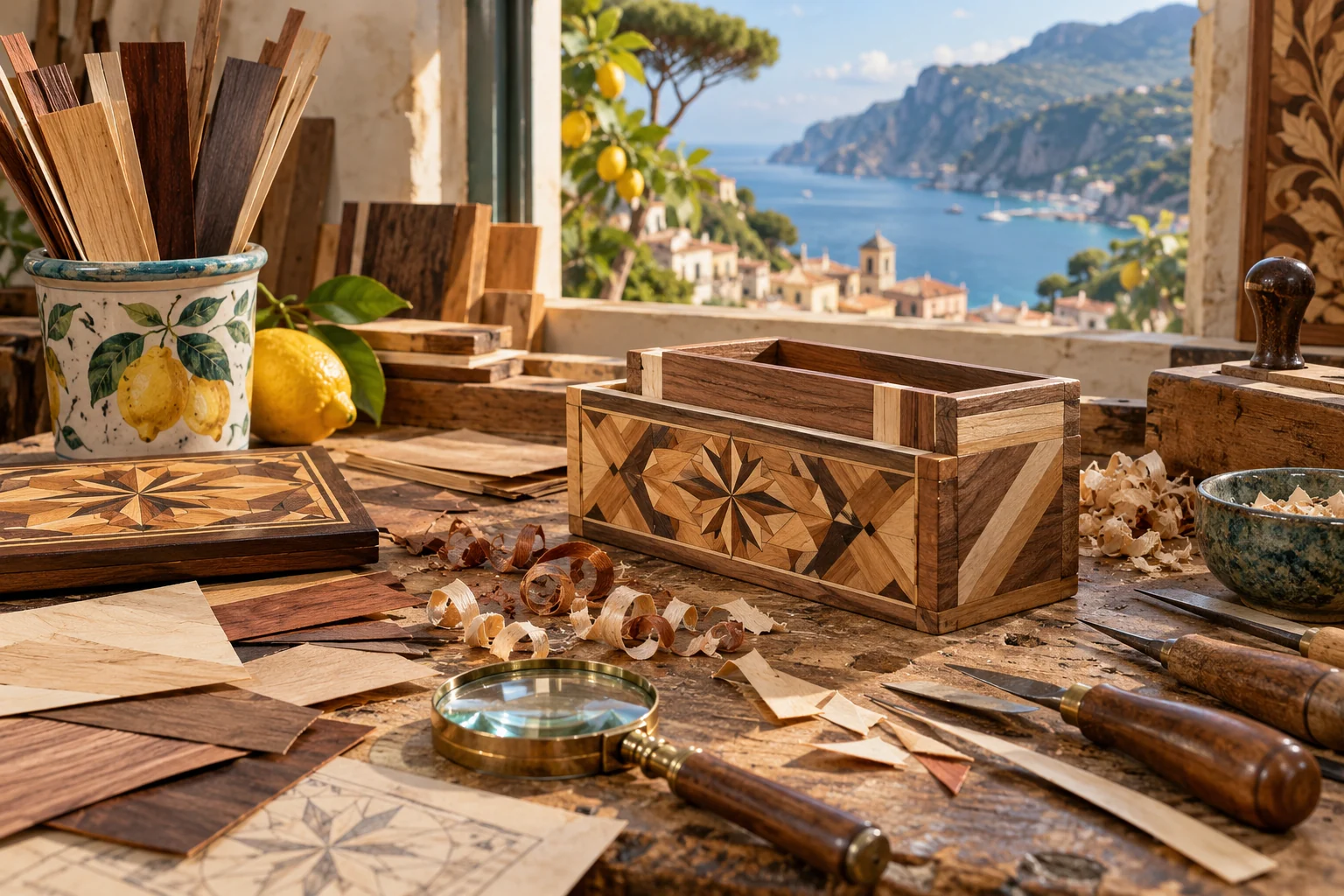
An inlaid wooden surface can trick the eye in a quiet way. From a distance, a pattern may look painted or printed. Move closer and the image begins to reveal itself as pieces of wood, each chosen and fitted to contribute a color, line or change of grain. Sorrento’s association with this craft makes it a rewarding subject for a museum visit or a conversation in a workshop. You do not need to be shopping for furniture to enjoy learning how to look.
Begin with the material rather than the motif
Notice whether the grain runs with the shape or cuts across it. A small piece may create shading through its natural pattern, while another contributes a crisp outline. Step back, then look closely again: the whole design and its component parts offer different kinds of pleasure. Avoid touching unless invited, since an object that appears robust may have a delicate surface or belong to a collection.
A useful first question is simply, “How was this part made?” It invites an explanation without requiring you to pretend expertise. Ask whether the decoration is inlaid wood, another applied technique or a printed surface. Those processes can produce different objects at different prices. Clear information is more valuable than a general claim that something is traditional.
Visit a place that connects past and present
MUTA, the Museobottega della Tarsialignea, was founded in 1999 in Palazzo Pomarici Santomasi. Its official description emphasizes both the preservation of Sorrentine inlay and its continuing development through a working workshop and contemporary design. That dual purpose is useful for visitors: it presents craft as something people still think with, not just something to admire behind glass.
The museum’s route includes historical context, techniques and materials, design education and makers. Check current visitor arrangements before going, particularly if you want a guided visit or workshop activity. Our arts and culture collection also links to editorial ideas; we do not label an ordinary museum visit as a live performance or invent a bookable class when no verified product meets our standard.
Compare the object with its intended use
A box, a table and a decorative panel ask different questions of the maker. Is the pattern meant to be seen from above, from across a room or in the hand? Does a border draw your eye toward the center, or does the decoration work evenly across the whole surface? Does the form invite use, display or both? Thinking about these choices makes the object more interesting than a simple measure of intricacy.
Look at the joins between decorated and undecorated areas. A restrained design can require considerable care, even when it is less immediately spectacular than a dense scene. Our Museo Correale guide offers another setting for comparing decorative objects. Seeing several examples in different contexts helps you separate your own taste from assumptions about what must be valuable.
Ask respectful questions before buying
If a piece appeals, ask who made it, where it was produced, what materials were used and how it should be cared for. Clarify whether the seller is the maker, a workshop representative or a retailer. None of those roles automatically makes the object good or bad; understanding the relationship simply makes the purchase more informed. Ask permission before photographing a workshop or detailed design.
Consider transport and everyday use as carefully as appearance. A fragile or awkwardly sized object may need specialist packing. A small piece you can enjoy regularly may suit you better than an impressive one with no place at home. Keep receipts and written descriptions where appropriate, and do not let a dramatic sales narrative pressure you into a quick decision.
Take the habit of looking back into the town
After studying inlay, other surfaces become more noticeable: a doorway, a ceramic pattern, the arrangement of a shop display. Craft trains attention to repetition, variation and the choices within a small area. You can bring that attention to a walk through Sorrento’s historic lanes, noticing how contemporary work and older buildings share the same streets without needing to belong to the same period.
For travelers interested in Italian design more broadly, our sister guide’s Milan introduction offers a useful next chapter. The comparison is not about deciding which city has the better objects. It is about seeing how different places connect making, materials and daily life. A Sorrento marquetry visit succeeds when a polished surface stops looking effortless and begins to reveal the thoughtful work that made it possible.
Sources & further reading
Turn a good read into a great day.
Find a highly rated Sorrentine experience that brings these stories to life.
Explore related experiences →