How do you read Sorrento’s old town beyond the shop windows?
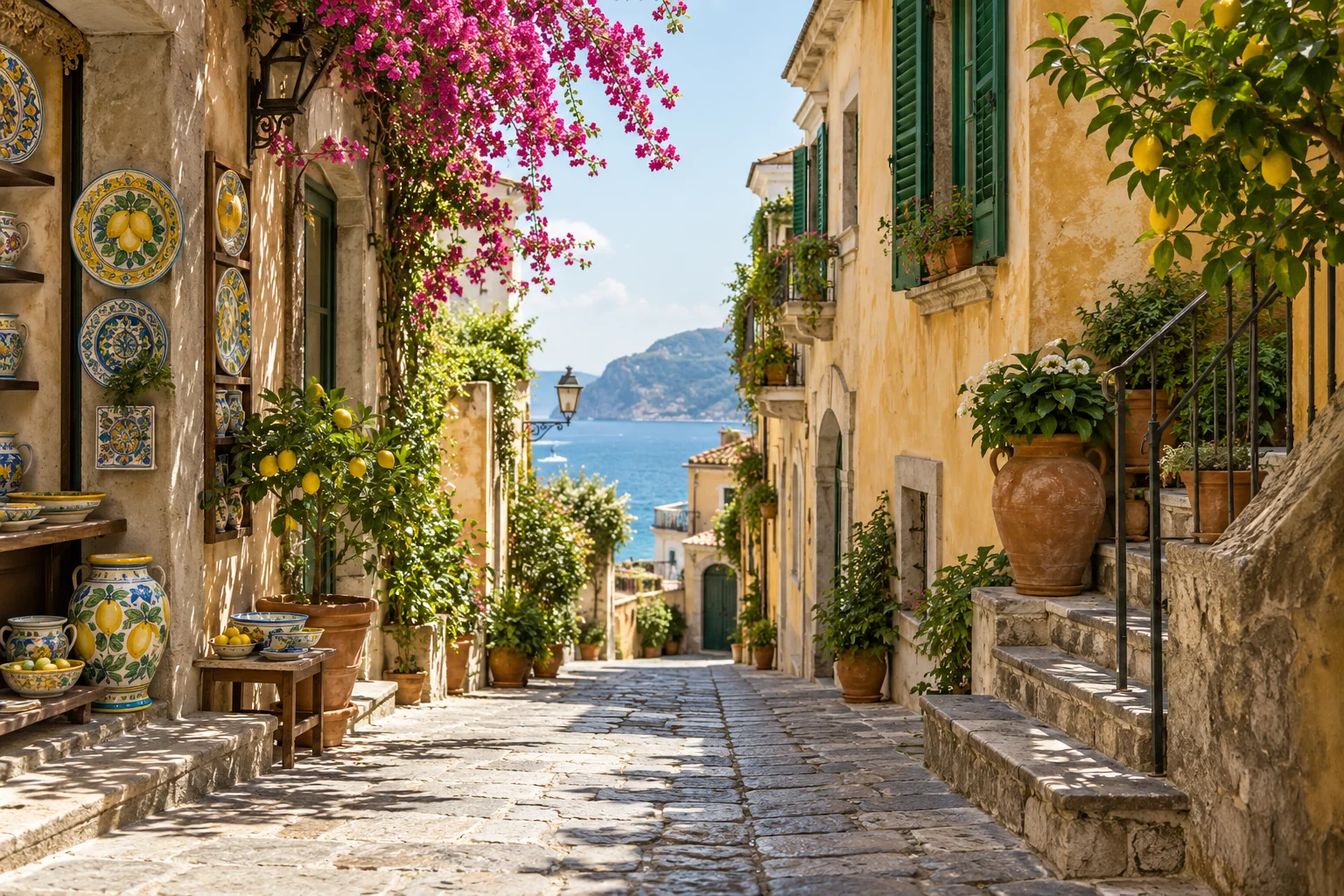
Sorrento’s historic center can initially look like a cheerful sequence of shop windows: lemons, ceramics, bottles and polished wood. Shopping is part of its present life, but the streets also hold clues to older civic, religious and domestic worlds. A more interesting walk begins when you stop asking only what a building is called and start asking how a space works. Who gathered here? What was meant to be seen? Which details survive because people continued using them?
Read the street before choosing the landmark
Notice the difference between a broad route and a narrow lane, between a shaded passage and an opening that suddenly offers space. Those changes affect movement, conversation and the way façades are seen. Rather than assigning a period to every wall, look for contrasts: a carefully framed doorway, a balcony over an active shop, a patch of older stone beside newer work. Towns rarely present their history in neat chronological order.
Carry a small set of questions instead of a long list of monuments. Is this a public space or a threshold into somewhere private? Does the decoration address the street or the people inside? Can you see signs of repair? These observations require no specialist vocabulary. A local guided walk can add names and context, while your own noticing makes the explanation easier to retain.
Let civic spaces interrupt the shopping rhythm
Sedil Dominova is one of the historic-center places identified by the municipality. Approach it as a reminder that towns need settings for collective life, not simply as an attractive stop for a photograph. Pause where you are not obstructing anyone, look at the relationship between the structure and the surrounding lane, and consider how an open architectural form can make authority visible in everyday space.
Be careful with tidy origin stories. A guide may distinguish documented use from local tradition, and that distinction is worth hearing. You can enjoy a story without repeating it later as an established fact. The useful question is not whether a building is the oldest or the most important; it is what the surviving space helps you understand about the town. Small places can answer that question particularly well.
Look for changes in material and scale
The San Francesco complex offers a different pace from the commercial lanes. The municipal account describes different arch forms in its cloister, a helpful prompt to compare shapes rather than merely admire an overall atmosphere. You do not need to date each element yourself. Look at where an arch begins, how it meets its support, and whether the rhythm changes as you move around the courtyard.
Our short guide to the cloister turns this into a manageable visit. Remember that religious buildings may have services, ceremonies or access restrictions. A quiet space is not an invitation to ignore its current purpose. Keep voices low, follow the instructions in place, and accept that an interior may be unavailable even when you planned to see it.
Treat craft as part of the town’s history
Wood inlay offers another route into Sorrento. A finished box can appear effortless from a shop doorway, yet its surface invites questions about veneer, grain, pattern and the labor of fitting small pieces together. MUTA, the Museobottega della Tarsialignea, explicitly connects historical collections with an active workshop and contemporary design. That connection makes craft feel like a continuing practice rather than a sealed chapter.
Read our introduction to Sorrentine inlay before comparing objects. Ask where something was made and what process was used; an honest answer is more useful than a vague claim of authenticity. You do not need to buy a large piece to take the subject seriously. Looking closely, asking a respectful question and supporting a maker when something truly appeals are all meaningful forms of attention.
End with a route you can remember
Keep the walk compact enough that the places connect in your mind. Finish near somewhere you can sit, review a few photographs and choose one detail to remember. A notebook description such as “the arches changed shape halfway around the courtyard” is often more useful than twenty unlabeled pictures. Add the correct place name later from a reliable source rather than guessing in the moment.
Travelers continuing to Venice may enjoy comparing two craft traditions without treating them as interchangeable. Our sister guide’s Venice introduction opens another world of workshops and historic streets. Here in Sorrento, the rewarding discovery is how ordinary errands, visitors and old architecture share the same lanes. The town becomes richer when you see that overlap, and slower walking is usually all the equipment required.
Sources & further reading
Turn a good read into a great day.
Find a highly rated Sorrentine experience that brings these stories to life.
Explore related experiences →