Villa Fiorentino in Sorrento: a house shaped by craft and culture

Villa Fiorentino offers a useful change of scale in Sorrento: a house with a story of skilled work, international customers and later public cultural use. Its history begins much closer to our own time than the town’s ancient walls or medieval religious buildings. That makes it an appealing stop for travelers who want to understand how craftsmanship and hospitality helped shape modern Sorrento.
Plan the visit around what is actually open or on display on your date. The building’s history and a temporary exhibition are related pleasures, but they are not the same thing. Our introduction to reading Sorrento beyond the shop windows provides a good starting point for noticing that commercial life also leaves meaningful architectural and cultural traces.
A house connected with fine handkerchiefs
Fondazione Sorrento’s history of Villa Fiorentino describes Antonino Fiorentino and Lucia Cuomo as artisans associated with fine embroidered handkerchiefs. Their house was completed in the mid-1930s, with spaces intended both for living and for showing their work to clients. The foundation connects the villa’s later public role with the couple’s decision to leave the property to Sorrento.
A handkerchief may seem a modest starting point for a substantial house, which is precisely why the story is interesting. It invites questions about skill, presentation and the value people attach to fine materials. Think about the difference between seeing a finished object in a shop and understanding the patient work behind it. The small scale of the product does not make the story of making it small.
Look at the house as a place of welcome
Approach the building by noticing how its facade and entrance guide your attention. Which features make it feel formal, and which suggest domestic use? If the current visitor route allows access to interior spaces, consider their scale and sequence before concentrating on the exhibition. A room can be enjoyable as both a setting for art and part of the house’s own history.
Keep observation separate from reconstruction. Unless an explanation identifies an original function, do not assume every room was a showroom or that present furnishings belonged to the original owners. Buildings adapt to new uses, and cultural venues need practical arrangements for visitors and displays. The pleasure is in noticing those layers, not pretending the villa has remained unchanged since its first occupants arrived.
Check the exhibition, not an old photograph
Use Fondazione Sorrento’s current programme to establish what is happening during your stay. Confirm dates, opening arrangements, ticket requirements and the actual venue. A past exhibition page can remain online after its closing date, and a photograph may show a room configured for a different show. Save the details for the event you intend to attend rather than relying on a general search result.
Before booking, ask what you most want from the visit: a particular artist, a chance to look at craft, or simply a cultural pause in town. If the current programme does not match that interest, another museum may be a better choice. Our guide to Museo Correale helps you consider a different kind of collection without treating every indoor attraction as interchangeable.
Follow a thread from one craft to another
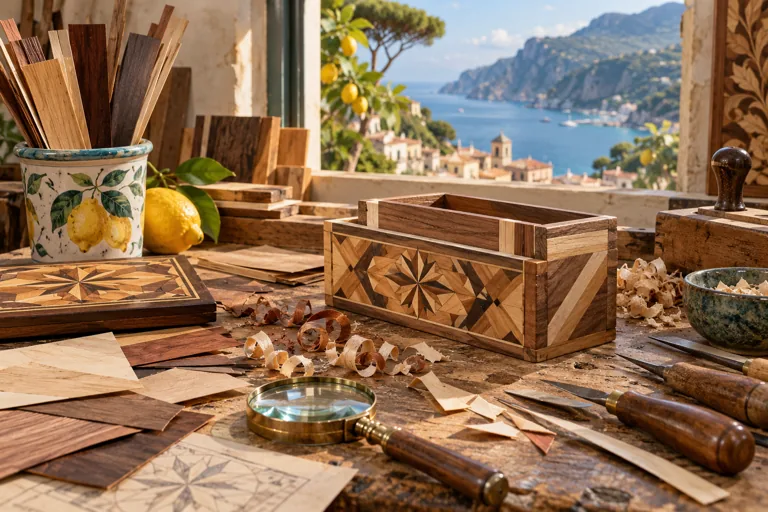
The villa’s textile story makes a thoughtful companion to Sorrento’s inlaid-wood tradition. The materials and techniques differ, so the comparison should focus on questions rather than supposed similarities. How does the maker create a pattern? Which details require close looking? How do workmanship, design and presentation contribute to the object’s effect?
You can carry those questions into a shop or workshop visit without turning it into a demand for a free demonstration. Ask politely about the work, respect photography rules and distinguish locally made pieces from products whose origin is not stated. An informed purchase begins with clear information. It need not be hurried simply because the object is small enough to fit in your luggage.
Make the stop part of an unhurried town day
Villa Fiorentino’s history belongs naturally beside a walk through the old center and a look at Sorrento’s walls. You can choose one indoor stop and one outdoor theme, then leave the rest of the day open. Check the current route if steps, standing or access to particular rooms affect your plans; a central address alone does not answer those practical questions.
Browse Sorrento arts and events for other cultural experiences, checking each named venue and date before booking. After the visit, a quiet pause is enough. Let the connection between a carefully worked handkerchief and a public cultural house settle in: it is a distinctly Sorrentine reminder that the history of a place can be carried by objects people once held in their hands.
Sources & further reading
Turn a good read into a great day.
Find a highly rated Sorrentine experience that brings these stories to life.
Explore related experiences →